


Fiverr - Freelance Service
4.328.38K Reviews
App Specs
- Version
- Varies with Device
- Updated On
- License
- Free
- Downloads
- 10,000,000+
- Developer
- Fiverr
- Categories
- Business
- Platform
- Android, iOS
Screenshots



 Analysis by AppCompare
When a project hits a skill gap, the hardest part is often not finding a person who can help; it is turning a vague need into a clear brief and choosing someone whose work fits. I see Fiverr as a practical place to start that process. It is a free business app from Fiverr, available on Android and iOS, with more than 10 million installs and an average rating of 4.3 from around 359,000 ratings. Its Everyone age rating also makes it broadly accessible, though the work you commission still calls for careful judgment.
From a rough idea to a finished handoff
I find the most useful way to approach Fiverr is to decide what a finished handoff should contain before browsing: the file or service you need, the materials you can provide, and the checks you will use to judge the result. That turns a broad search into a more focused comparison. The next section follows that path from shaping a request to deciding whether the final work is ready to use.
Start with the job, not a job title
Before opening the app, I would write down what needs to change by the end of the project. “Improve my online presence” is too broad to compare fairly; “make a set of social graphics using these existing brand colors” gives you a more useful starting point. That small bit of preparation helps you search for an outcome rather than guessing which type of freelancer to hire.
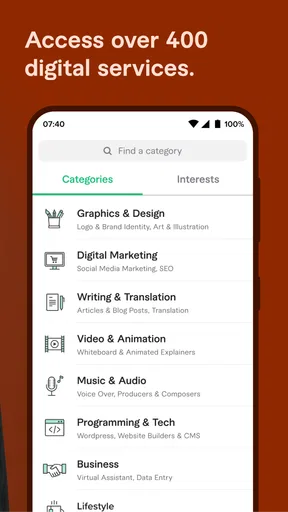
This is especially useful when you do not know the right service label. Fiverr is a business marketplace, but many projects sit between familiar roles: a product launch might need writing, design, and a short edit rather than one generalist. Browsing its service categories can help you discover those options, while a focused search keeps the shortlist manageable.
Compare portfolios with a specific question in mind
Have you ever found yourself stuck on a project, desperately needing a specific skill set that you just don't possess? Enter Fiverr, the ultimate marketplace for freelance services that connects you with talented professionals from around the globe. Whether you're a small business owner or just someone with a creative project, Fiverr has got your back.
From the moment you land on the app, you’re greeted with a sleek and user-friendly interface that makes navigation a breeze. The search bar is prominently displayed, inviting you to type in exactly what you’re looking for. Need a graphic designer, a copywriter, or someone to edit your podcast? Just type it in, and let the magic unfold.
One of the coolest features is how the categories are neatly laid out, from Digital Marketing to Programming & Tech. This makes it super easy to explore different services you might not have even realized you needed. Plus, the app is available on both Android and iOS, so you can take your freelance search on the go.
Worth Reading Before You Choose

Flipboard Shows What News Apps Must Do Beyond the Feed

Switching to Android Auto Means Rethinking Your Driving Routine

Google Calendar Makes a Crowded Week Easier to Manage

Ludo King Makes the Most of the Minutes Between Plans

Baby Panda World Brings Quick Play to Modern Phones, but Its Game Library Feels Busy

ESPN’s Live Game View Makes Following Close Games Easier
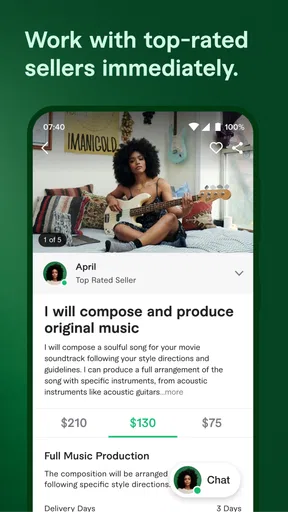
So, you’ve typed in what you need. Now what? The app presents you with a list of freelancers, complete with ratings, reviews, and starting prices. It’s like browsing a menu at a restaurant, but for services. The process is straightforward: click on a freelancer’s profile to see their portfolio, read reviews from past clients, and get a feel for their work style.
And talk about variety! There are freelancers from all walks of life, offering services that range from the super niche to the incredibly broad. If you’re into comparisons, there’s an option to save your favorite gigs and decide later. It’s like window shopping for talent.
When comparing profiles, I would not pick on the headline or starting price alone. I look for samples that resemble the actual job, then read reviews for clues about communication and whether the finished work matched expectations. A strong portfolio in a different style may be less useful than a modest one that shows the exact kind of deliverable I need.
Saving a few candidates is a simple but worthwhile step. It gives you room to compare scope and examples before committing, rather than choosing the first plausible result while you are in a hurry. I also keep a note of what each person would need from me; a promising match can still be a poor fit if I cannot provide the source files, references, or decisions required to begin.
Make the brief clear before placing the order
Found the freelancer of your dreams? Great! Now it’s time to place an order. The app guides you through a simple process where you can customize your request. Want something done in 24 hours? Need extra revisions? Just tweak the options, and the app calculates the cost instantly.
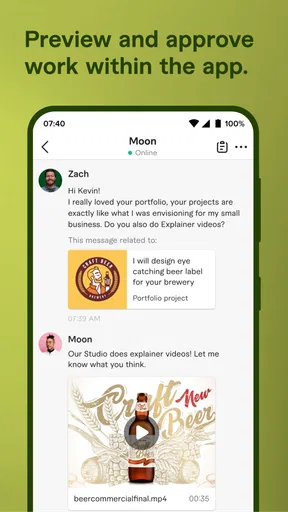
Communication is key, and Fiverr makes sure you’re never left in the dark. You can chat directly with freelancers to hash out details and make sure you’re both on the same page. It’s like having a conversation with a friend, minus the awkward small talk.
For a realistic example, imagine I need a short promotional video for a weekend event. I would gather the footage, logo, preferred format, and a couple of examples before messaging anyone. Then I would ask whether the listed service covers editing those materials and what the delivery includes. That exchange can reveal a mismatch early, before I have paid or built a deadline around an assumption.
One useful trade-off is speed versus clarity. If I send a rushed one-line request, I may save a few minutes but invite avoidable revisions. If I send a concise brief with the audience, purpose, references, and required files, the freelancer has a better chance of interpreting the task correctly. I keep the brief focused: enough detail to define success, without prescribing every creative choice.
Keep the handoff organized
For a business owner, the app is most helpful when a task has a clear boundary: a logo concept, a translation, a product description, or a piece of audio cleanup. It can also suit an individual who needs a specialist for a one-off project but does not need to hire an employee. In those cases, browsing, comparing, and messaging in one place makes the search feel more manageable.
It is less suitable when the work depends on long-term collaboration, deep access to confidential company systems, or frequent changes in direction. A local professional, an established agency, or a direct ongoing working relationship may make more sense when context and continuity matter more than quickly finding a particular service. I would also avoid outsourcing a task until I can explain what a successful result looks like.
Once the order is underway, I treat the conversation as a project record: I confirm the deliverable, share the agreed references, and keep feedback specific. “This feels off” is difficult to act on; “the title is hard to read against the background” points to a concrete issue. If several people on my side need to approve the work, I collect their comments first so the freelancer does not receive conflicting instructions.
The app’s chat is convenient for quick clarification, but it cannot make an unclear brief clear by itself. I would not assume that a short message settles every detail about formats, usage, or what counts as a revision. Before ordering, I check the service description and confirm any point that would change the scope. That modest bit of care can prevent the awkward handoff where each side believes a different result was promised.
Review the delivery against the brief
When it comes to payment, the app is incredibly secure. You pay upfront, but the funds are only released to the freelancer once you’re happy with the final product. It’s a win-win, ensuring peace of mind for both parties.
Once the work is delivered, you can easily download your files right from the app. If something isn’t quite right, you can request modifications at no extra cost, depending on the gig’s terms. It’s all about getting exactly what you paid for.
In my event-video example, I would check the delivered file against the agreed length, format, and supplied footage before sending feedback. If the edit misses a point in the brief, I can explain the difference plainly and ask about a correction. If I change the concept after seeing the first version, that is not the same as fixing work that missed the original instructions, so I would revisit the service terms rather than assume the change is included.
That distinction is one of the more important practical lessons: a revision is not a substitute for defining the job. I keep the original request nearby while reviewing the result, and I download and inspect the files before considering the handoff complete. For anything important, I also retain my own copies of the source materials and final deliverables instead of treating the app as my only archive.
Know where a marketplace workflow can break
Fiverr differs from asking friends for referrals because it lets me discover and compare many service providers without starting from a personal network. Compared with a traditional agency, it can feel more direct for a bounded task, while an agency may be preferable when I want one team to manage a larger, connected project. Neither route guarantees a good fit; the advantage here is choice, and the responsibility to assess that choice stays with me.
The marketplace approach can also create friction. A polished profile does not automatically mean someone understands my business, and a low starting price may not describe the scope I actually need. I would compare the complete service and communication, not treat the first price shown as the final cost for every version of a project.
Another possible break is timing. A freelancer may need information or feedback from me before work can move forward, so an order is not necessarily a hands-off solution. If I am about to go offline, cannot supply the materials, or need a guaranteed result without reviewing drafts, I should wait or choose a working arrangement better suited to that situation.
The app is backed by a large audience: it has more than 28,000 written reviews, and it has been available since March 11, 2014. I take that reach as a reason to expect a broad range of services, not as proof that every listing will suit my needs. The developer is Fiverr, and the app’s business focus is apparent in the way it brings service discovery and client-freelancer communication together.
Who will get the most from it?
One of the standout features of Fiverr is its community. The app is more than just a marketplace; it’s a hub where creativity thrives. There are forums and resources available for both freelancers and clients, making it a great place to learn and grow.
Whether you’re a freelancer looking to offer services or a client in need of creative solutions, the app supports you every step of the way. It’s all about fostering connections and getting stuff done efficiently.
I think it is particularly useful for a first-time buyer who has a defined, limited task and wants to inspect examples before making a choice. It also works for a small team that needs occasional specialist help but can provide a clear brief and review the result promptly. The phone format is handy for keeping an eye on a conversation while away from a desk, though I would still prepare detailed requirements somewhere easy to check rather than composing an important brief in a rush.
By contrast, someone who wants a single supplier to own an entire strategy, coordinate several disciplines, and make decisions with little input may find this marketplace less comfortable. The same goes for a project whose requirements are still changing daily. In those situations, the time spent explaining, comparing, and aligning expectations can outweigh the convenience of finding individual services.
Before ordering, I would ask myself three practical questions: Can I describe the finished deliverable? Can I provide the materials and feedback on time? Have I checked that the examples and terms match what I need? If the answer to any is no, I would pause and clarify first. That is not a weakness unique to the app; it is the point where a marketplace workflow depends on the buyer as much as the freelancer.
My take after following the workflow
In a world where time is money, Fiverr is a game-changer. It’s the app that has revolutionized how we think about freelance work, making it accessible and easy for everyone. Whether you’re looking to hire or be hired, the app provides a seamless experience that’s hard to beat.
So next time you’re stuck on a project or need a helping hand, give Fiverr a try. It’s like having a world of talent at your fingertips, ready to bring your ideas to life.
My recommendation is more specific: use it when you can define a discrete piece of work, compare relevant examples, and stay available for a sensible handoff. Treat the profile as a starting point, the conversation as a chance to confirm scope, and the delivered files as something to check against your brief. That approach makes the app far more useful than browsing listings casually and hoping the right outcome appears.
For a quick decision, I would choose Fiverr over a broad search when I want to compare freelance services in one place. I would choose a referral or a direct professional relationship when trust, continuity, or detailed knowledge of my organization is the main requirement. It is free to install and use as an app, but freelance work itself is a paid service; the cost depends on the offer and scope rather than the download. Overall, I find it a useful route from a well-defined need to a specialist handoff, as long as I take responsibility for making the request clear.
Pros
- Wide range of freelance services available.
- User-friendly interface for easy navigation.
- Secure payment system ensures trust.
- Customizable search filters save time.
- 24/7 customer support enhances experience.
Cons
- Service fees can be relatively high.
- Quality varies across different freelancers.
- Limited free features for users.
- Occasional delays in project delivery.
- App notifications can be overwhelming.
FAQs for Fiverr - Freelance Service
What is Fiverr, and how does it work?
Fiverr is a global online marketplace that connects freelancers with clients seeking various services, from graphic design to digital marketing. Users can browse through different categories, select a service offered by freelancers (called 'gigs'), and place an order. Payments are made through the platform, ensuring security for both parties.
Is Fiverr free to use for freelancers and clients?
Creating an account on Fiverr is free for both freelancers and clients. However, freelancers pay a service fee of 20% on each transaction. Clients pay only for the services they purchase, but there may be additional fees depending on the order size and any extra features they select.
How can I ensure the quality of services on Fiverr?
Fiverr provides a rating and review system where clients can leave feedback about the services they received. Before hiring, you can view a freelancer’s portfolio, read previous client reviews, and check their ratings. This helps gauge the freelancer’s reliability and quality of work before making a purchase.
What payment methods does Fiverr accept?
Fiverr accepts a variety of payment methods, including credit and debit cards, PayPal, and Apple Pay. The platform ensures secure transactions by handling all payments internally, releasing funds to the freelancer only after the client approves the completed work.
What happens if I’m not satisfied with a service on Fiverr?
If you're unsatisfied with the service, Fiverr offers a resolution center where clients can communicate with freelancers to resolve issues. If a mutual agreement cannot be reached, Fiverr’s customer support can mediate disputes. In some cases, clients may be eligible for a refund or order revision.


